Field to Microscope: Identification, Mounting & Curation
Field to Microscope: Identification, Mounting & Curation
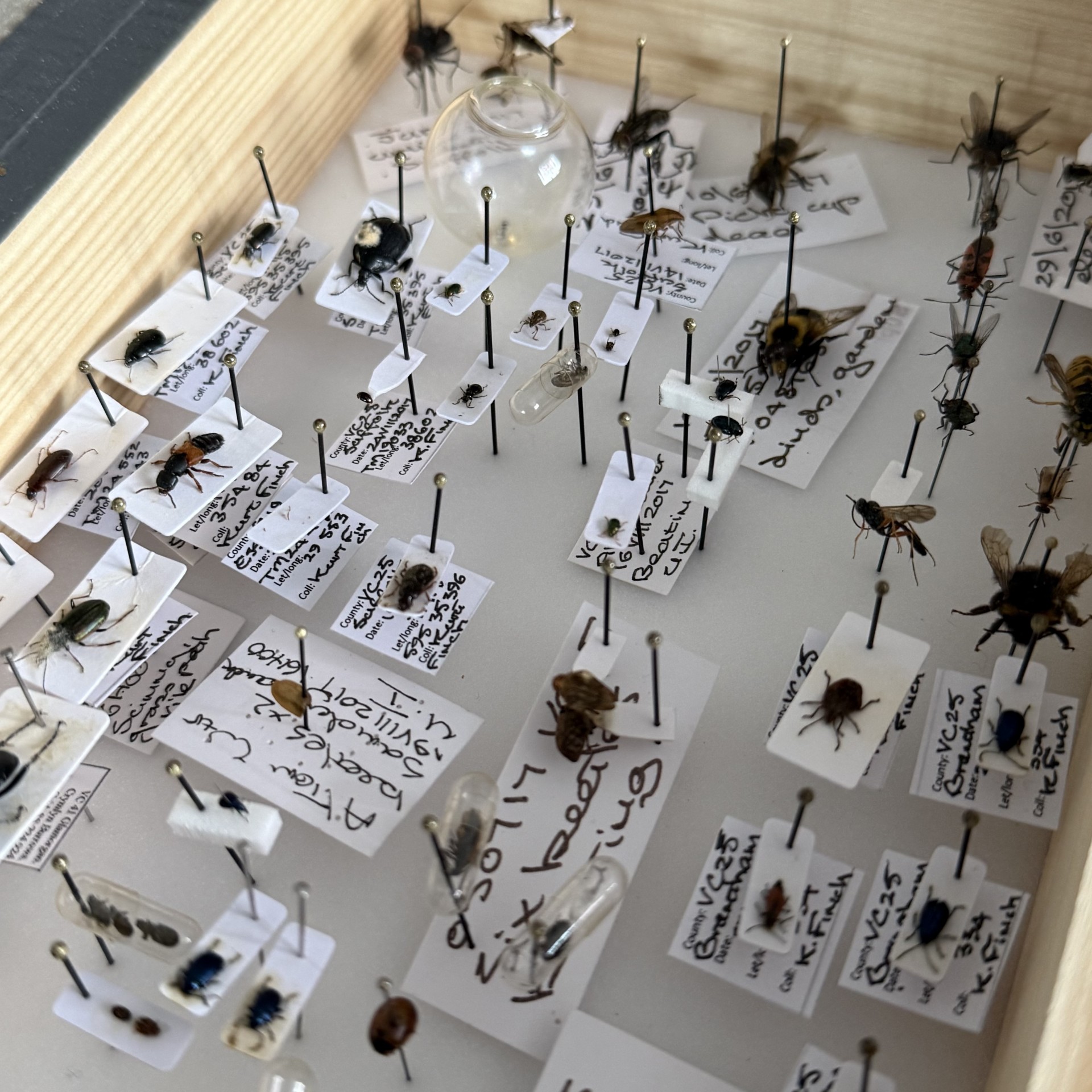
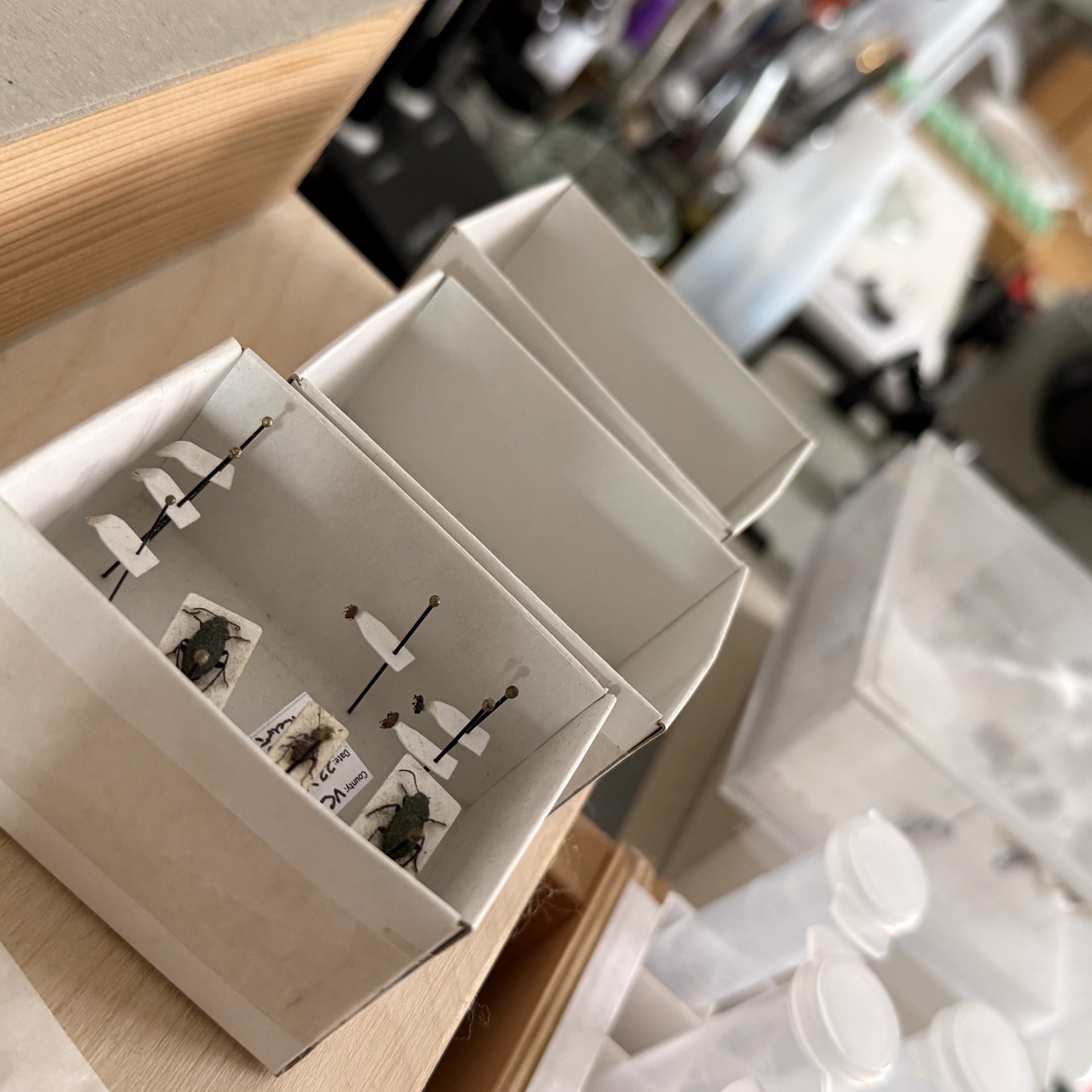
Two days learning to identify specimens, the various mounting techniques and of course long term curation for ongoing research long after we're gone.
Field to Microscope
Insect Identification, Mounting & Curation
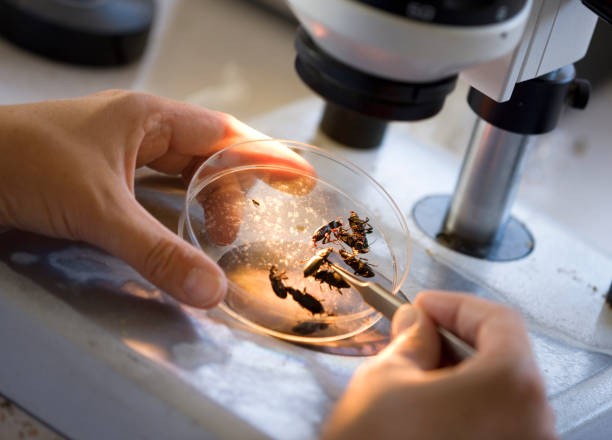
Learn how to move from field collection to organised bench work, microscope examination and properly prepared insect specimens.
This practical 2-day course is designed for developing naturalists, beginner entomologists, biological recorders and anyone who wants to understand what happens after an insect has been collected in the field.
Finding insects is only the first step. The real work begins when you return to the bench.
You need to organise your material, label it properly, preserve it correctly, examine it under a stereo microscope, use identification keys with care, and understand when a specimen can be confidently identified.
This course gives you a clear, practical system for doing that.
Why Take This Course?
Many beginners collect insects but then become stuck. They have tubes, pots, photographs or specimens, but no clear workflow.
They are unsure how to preserve material, how to label it, how to use a microscope, how to mount specimens, or how far they should go with identification.
That leads to confusion, damaged specimens, poor records and unreliable names.
This course solves that problem. You will learn how to move from field material to organised study, so your specimens and records become useful, traceable and worth keeping.
The aim is not to turn you into a taxonomic expert in two days. The aim is to give you the correct foundation for serious bench-based insect study.
What You Will Learn
Across two practical days, you will be introduced to the essential bench skills used in insect identification, specimen preparation and reference collection work.
You will learn:
- How to organise field-collected material
- How to keep specimens, notes and labels connected
- Temporary storage methods
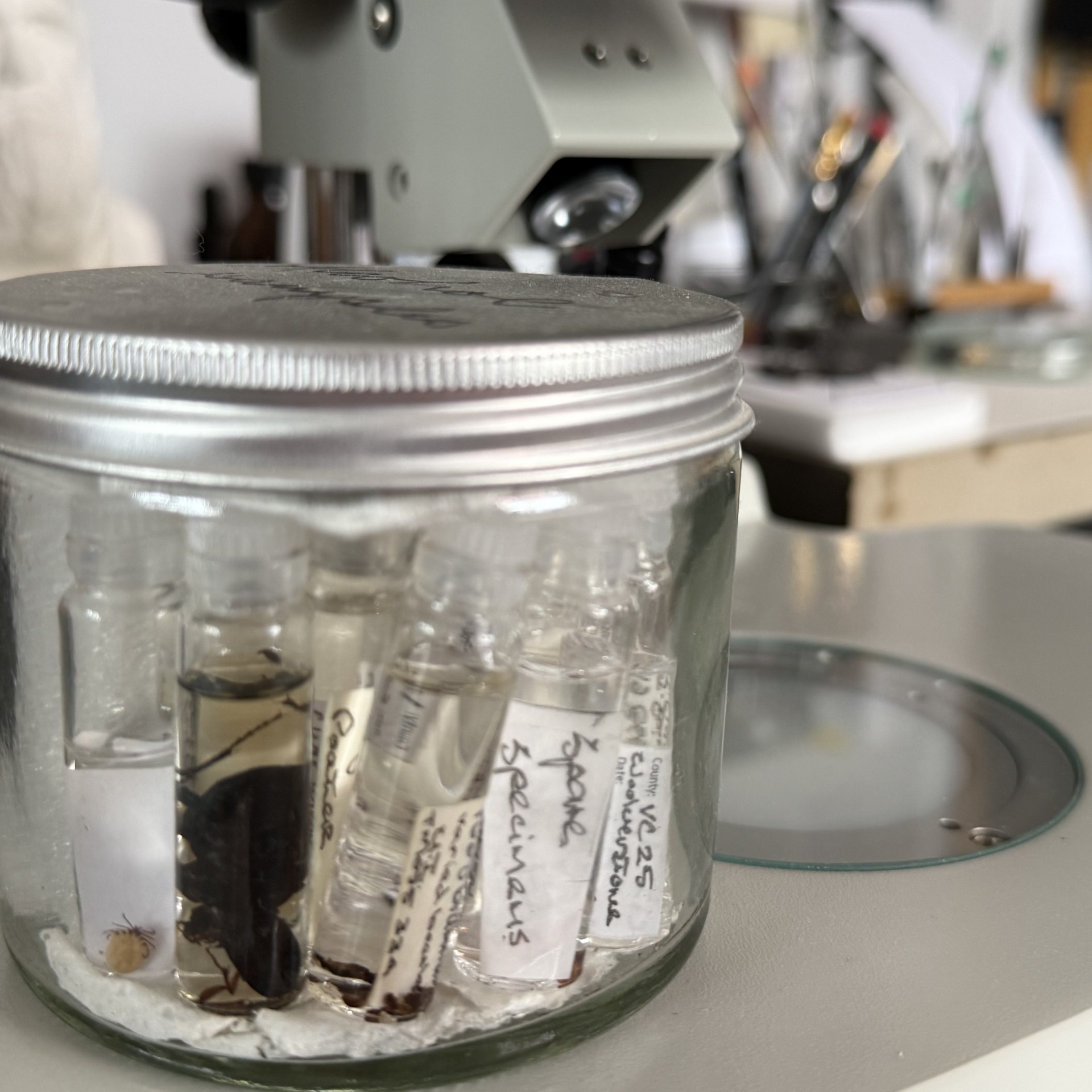
- Dry and ethanol preservation basics
- When ethanol preservation is useful
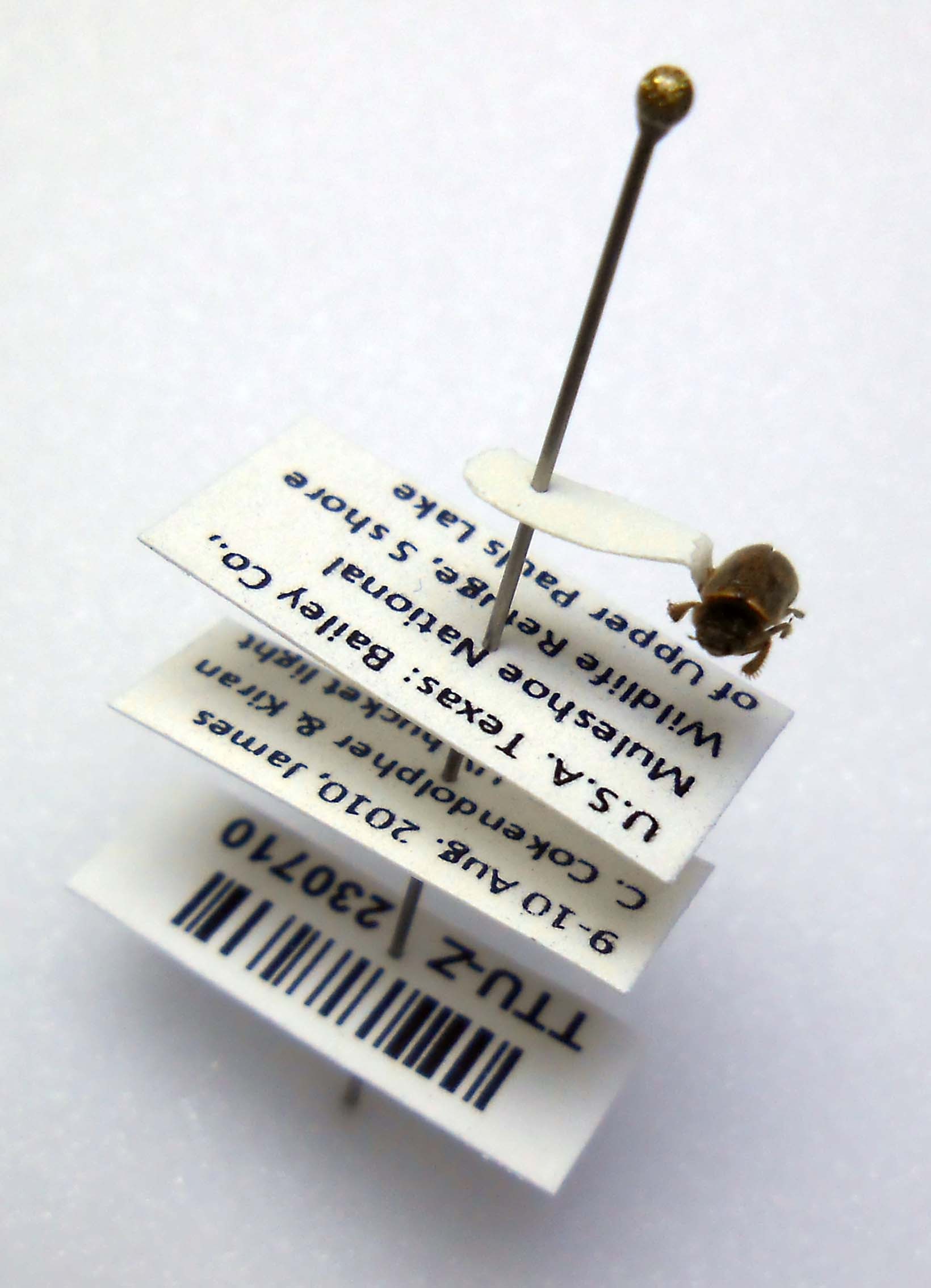
- How to prepare simple labels correctly
- Why date, location, grid reference, habitat and collector data matter
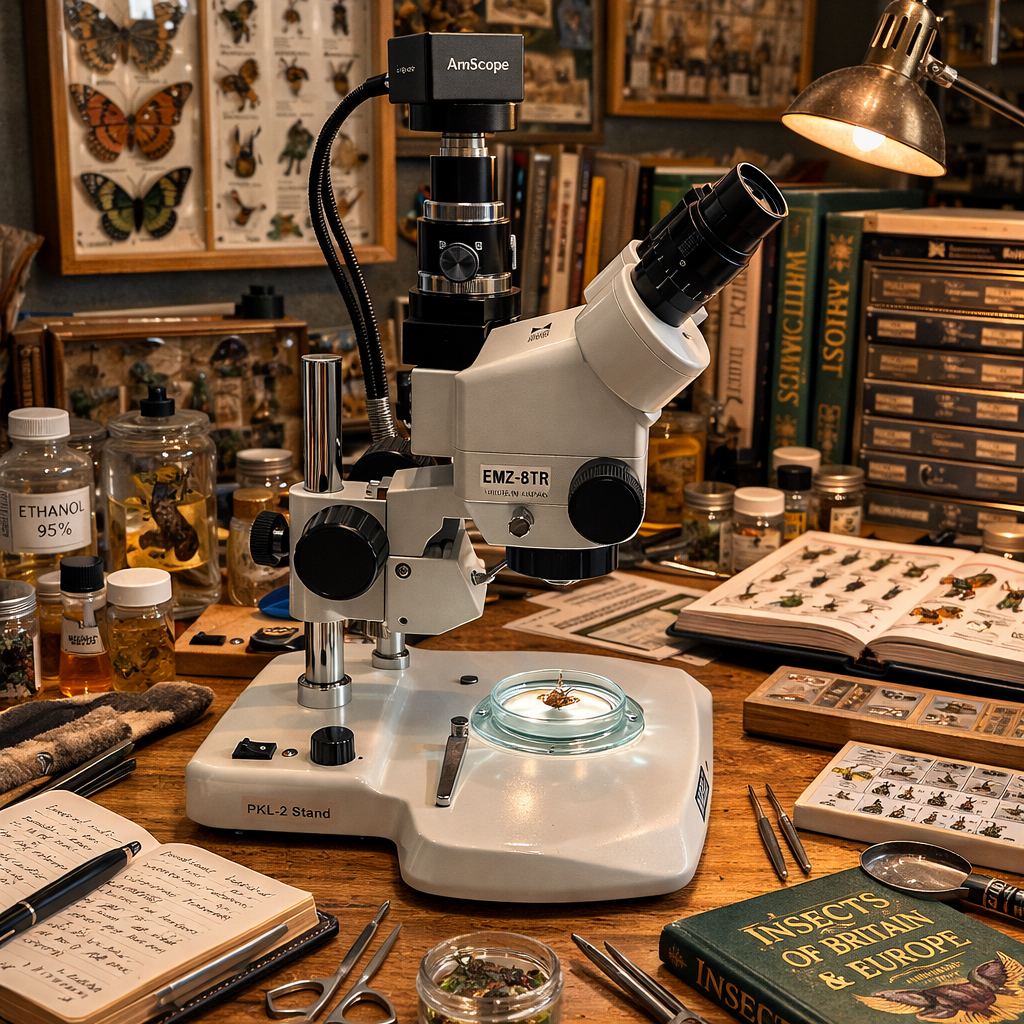
- How to set up a stereo microscope
- How to use lighting effectively
- How to handle small specimens safely
- How to recognise basic diagnostic features
- How to use identification keys without guessing
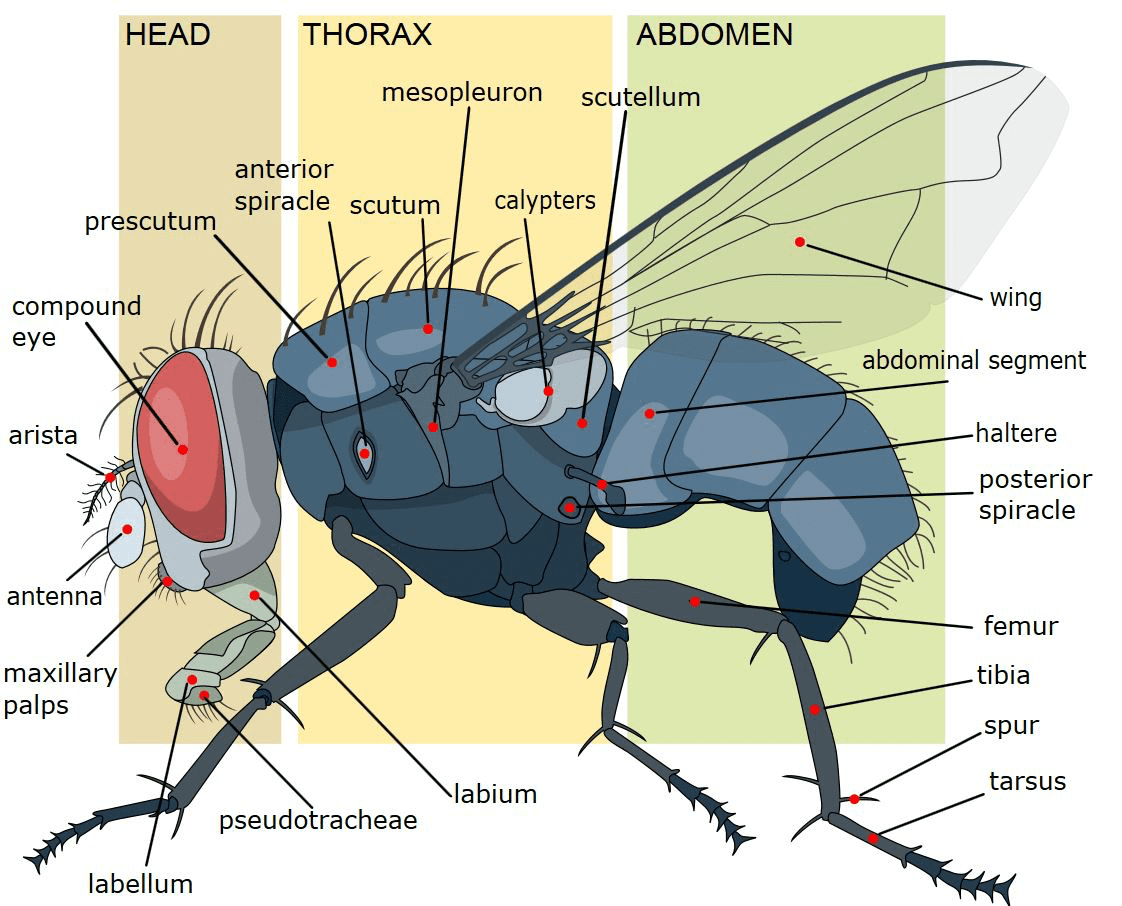
- How to understand basic insect morphology
- When identification to Order, Family or Species is realistic
- When to stop and seek specialist confirmation
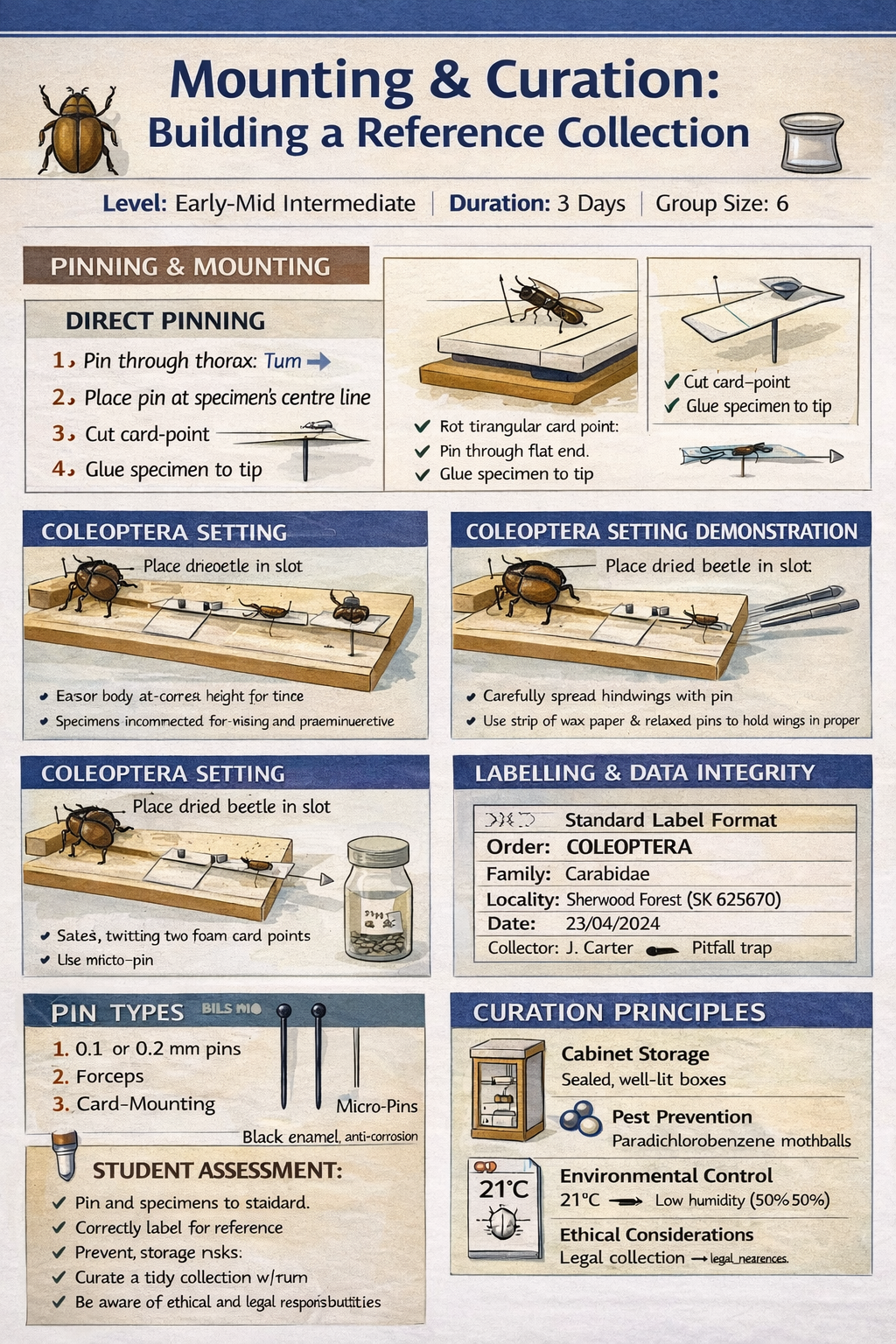
- Direct pinning of larger insects
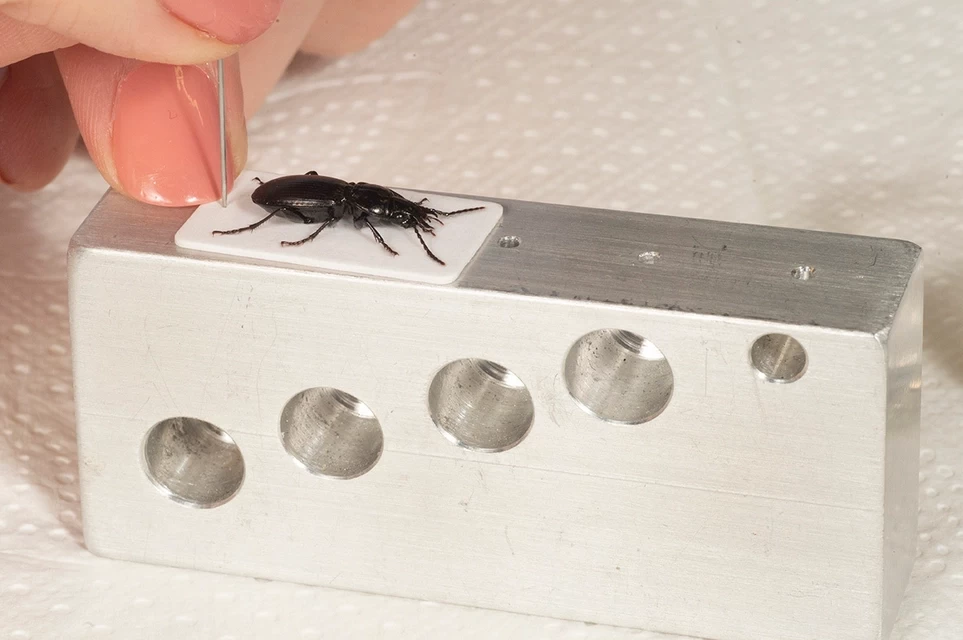
- Card mounting and card points
- Label placement and formatting
- Basic storage and curation principles
- How to begin building a small reference collection responsibly
This is practical, careful, methodical work.
From Field Collection to Bench Workflow
Good entomology depends on organisation.
You will learn a simple workflow for dealing with material after fieldwork:
- Sort the material
- Match specimens with field notes
- Check labels and location data
- Decide whether to preserve, examine, mount or release
- Prepare the specimen correctly
- Examine it under the microscope
- Use identification keys carefully
- Record the identification honestly
- Store the material safely
This gives you clarity. Instead of a box of confusing specimens, you begin building an ordered study system.
Microscope Skills
A stereo microscope opens up a new level of insect study. Many insects cannot be identified properly by eye or photograph alone. Important features may be small, hidden or easy to miss.
You will learn how to:
- Set up a stereo microscope
- Adjust magnification
- Use reflected light
- Improve visibility with better lighting
- Position specimens safely
- Handle small insects without damage
- Look for useful features
- Avoid common beginner mistakes
The microscope is not there to make the course look technical. It is there because proper insect identification often depends on detail.
Insect Identification and Keys
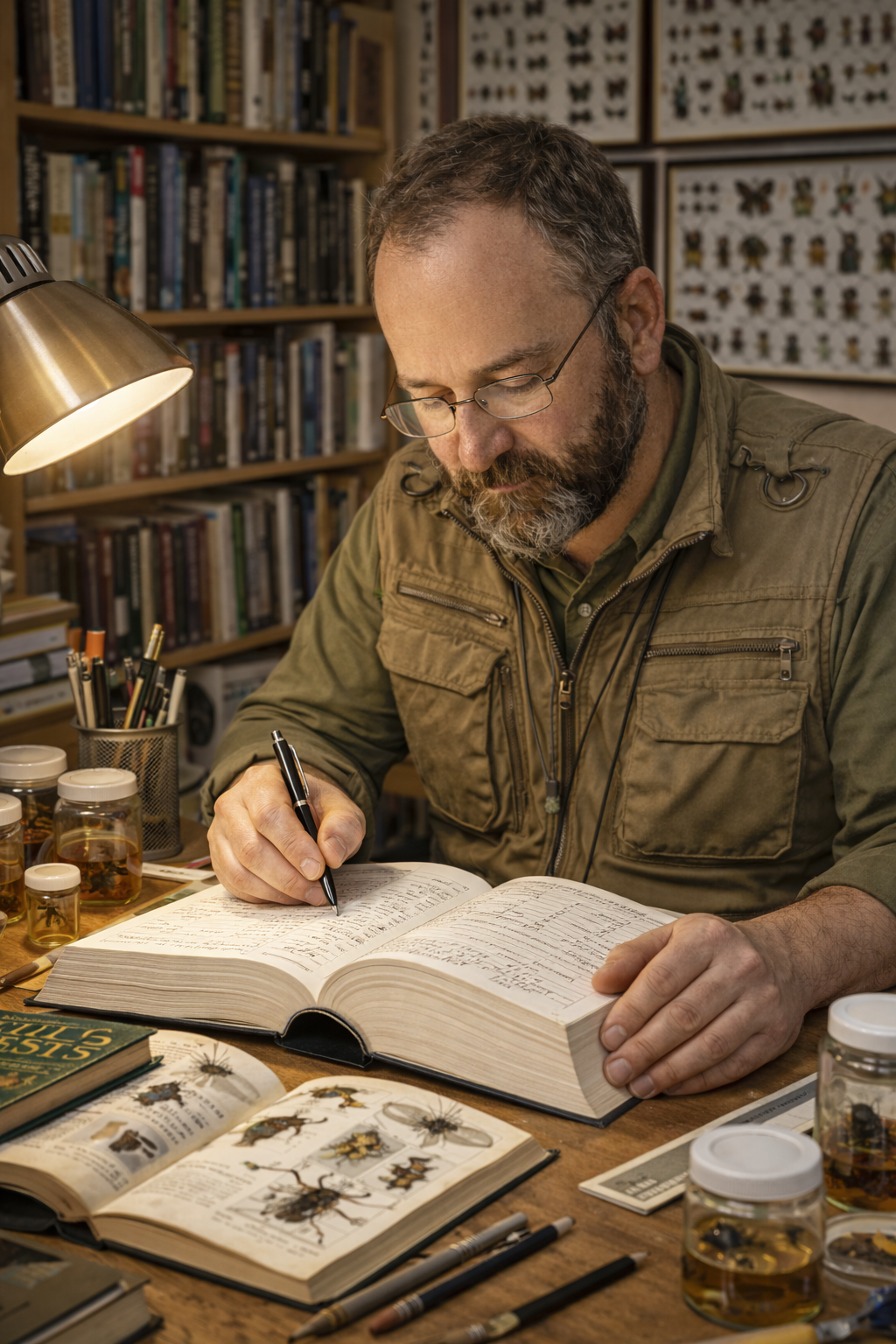
Identification is not guessing from pictures. You will be introduced to the disciplined use of identification keys and basic morphology.
You will learn how to:
- Recognise major insect Orders
- Understand basic body parts and terminology
- Look for diagnostic features
- Work through a key carefully
- Avoid jumping to conclusions
- Record uncertain identifications honestly
- Understand when species-level identification is not realistic
A careful identification at the right level is better than a confident mistake. This course teaches that discipline from the start.
Mounting and Specimen Preparation
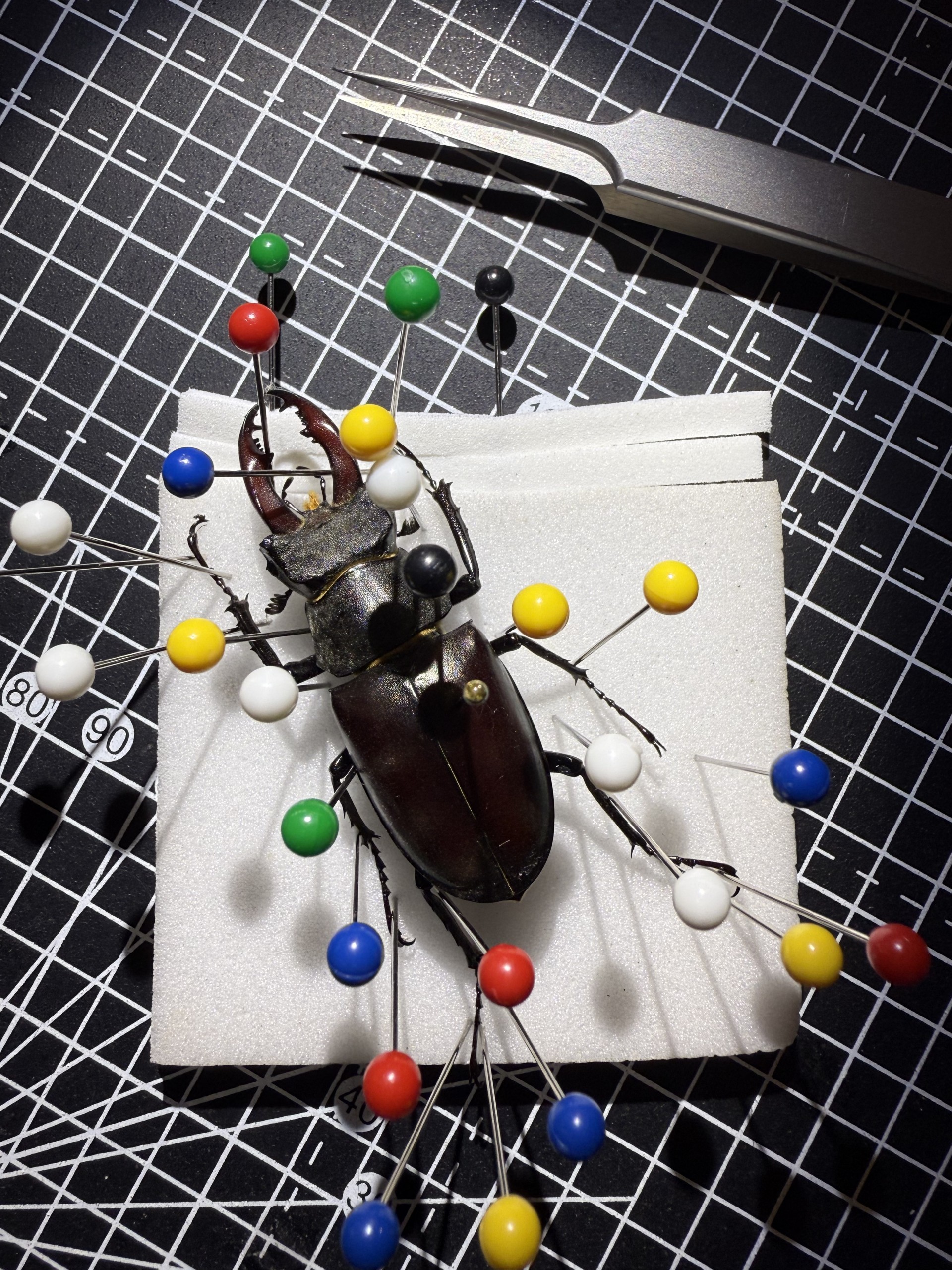
You will be introduced to the basic techniques used to prepare insects for study and reference collections.
This may include:
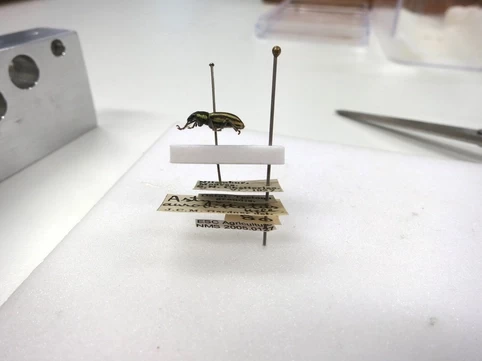
- Direct pinning of suitable larger insects
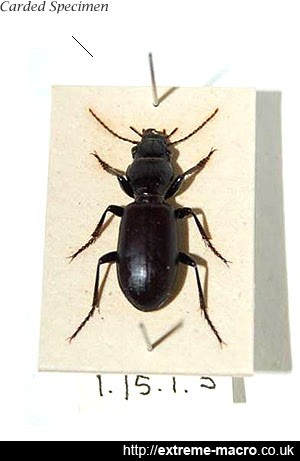
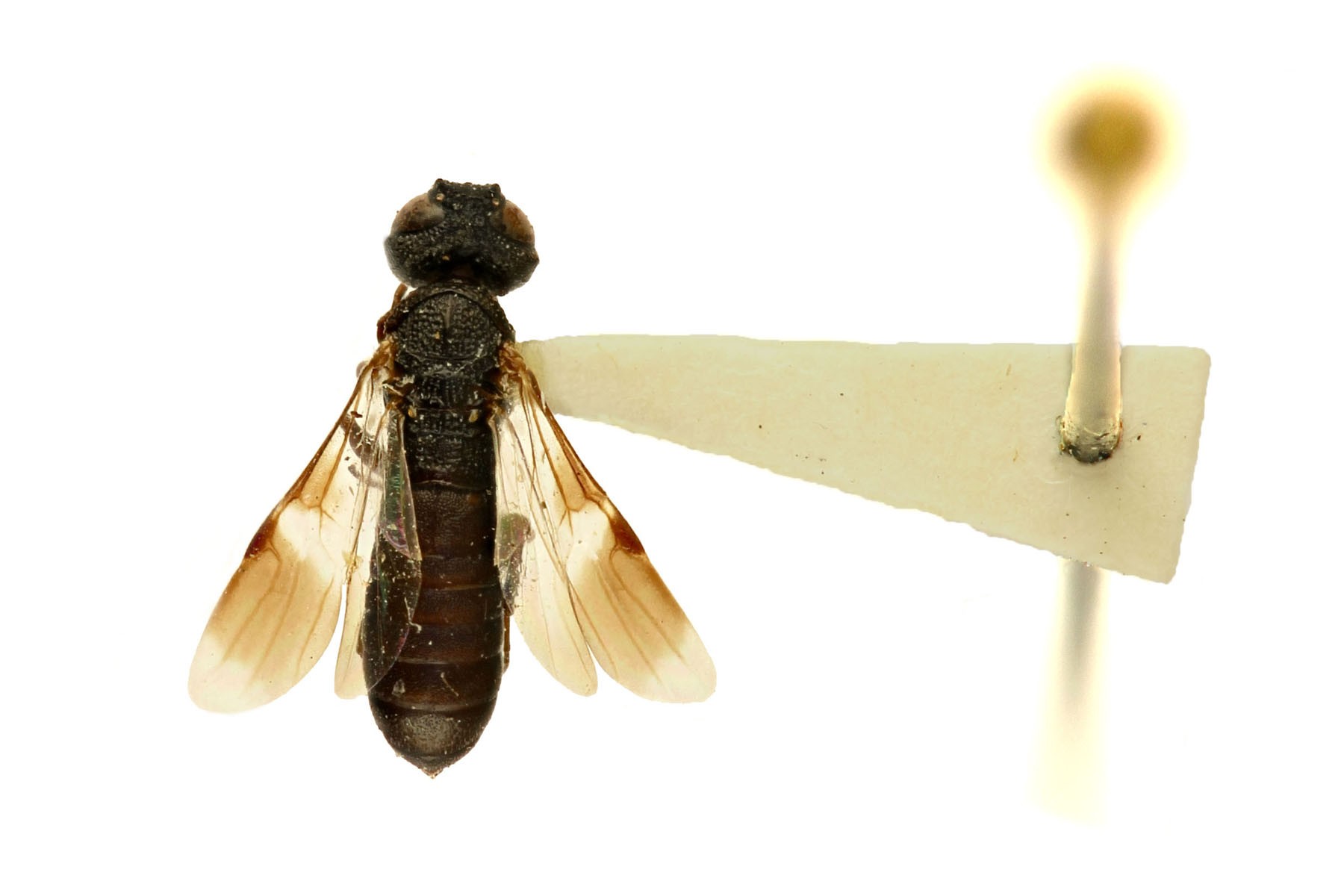
- Card mounting
- Card points
- Handling delicate specimens
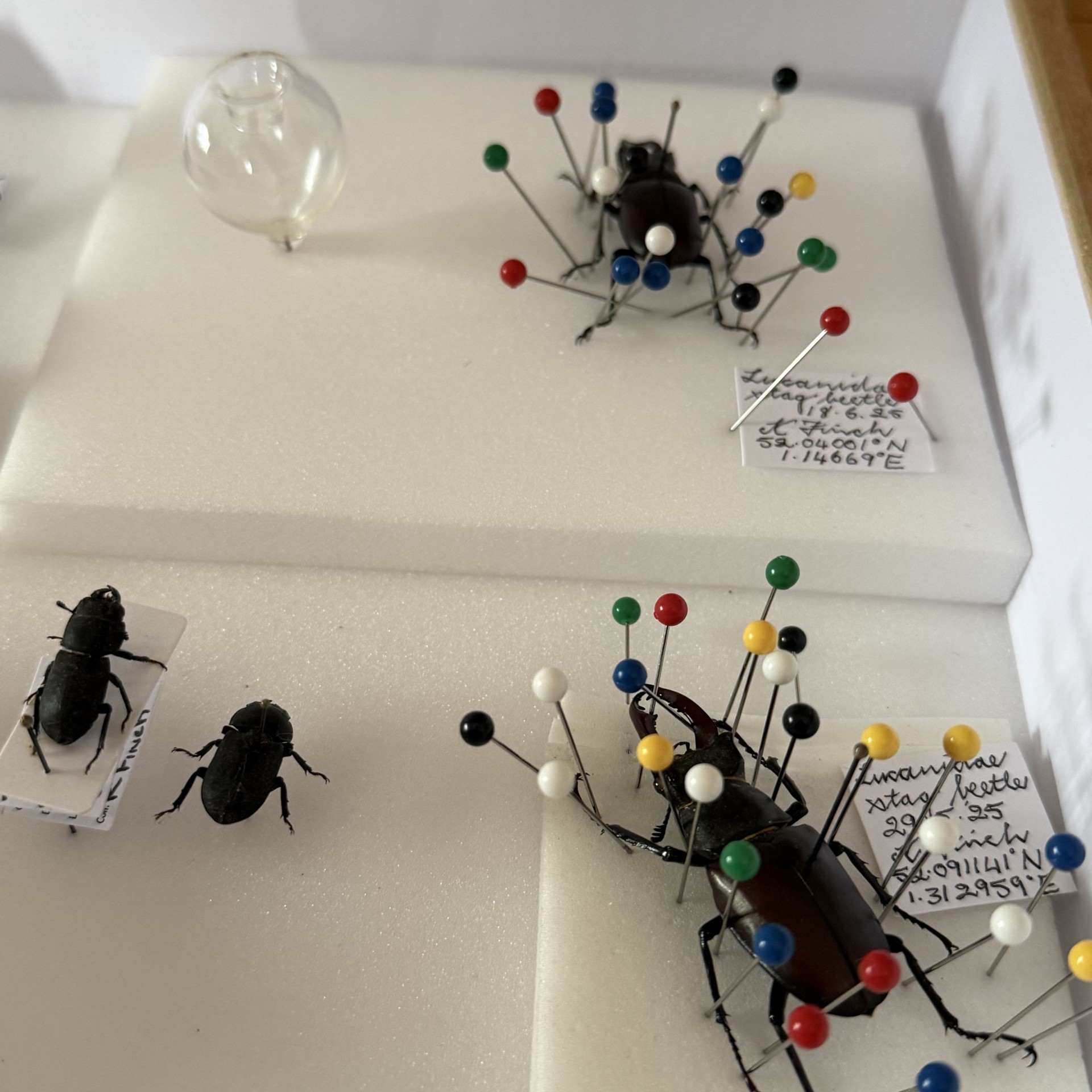
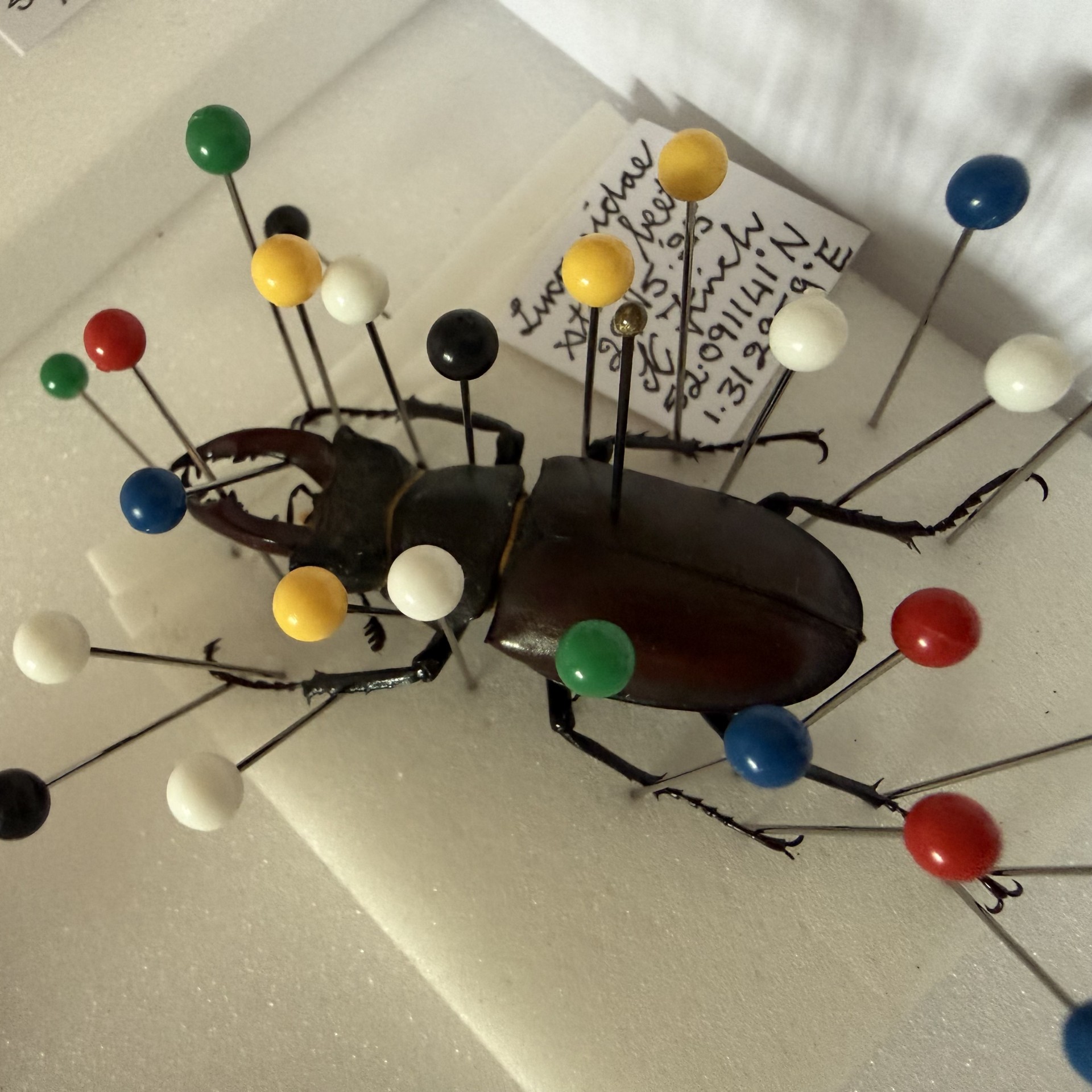
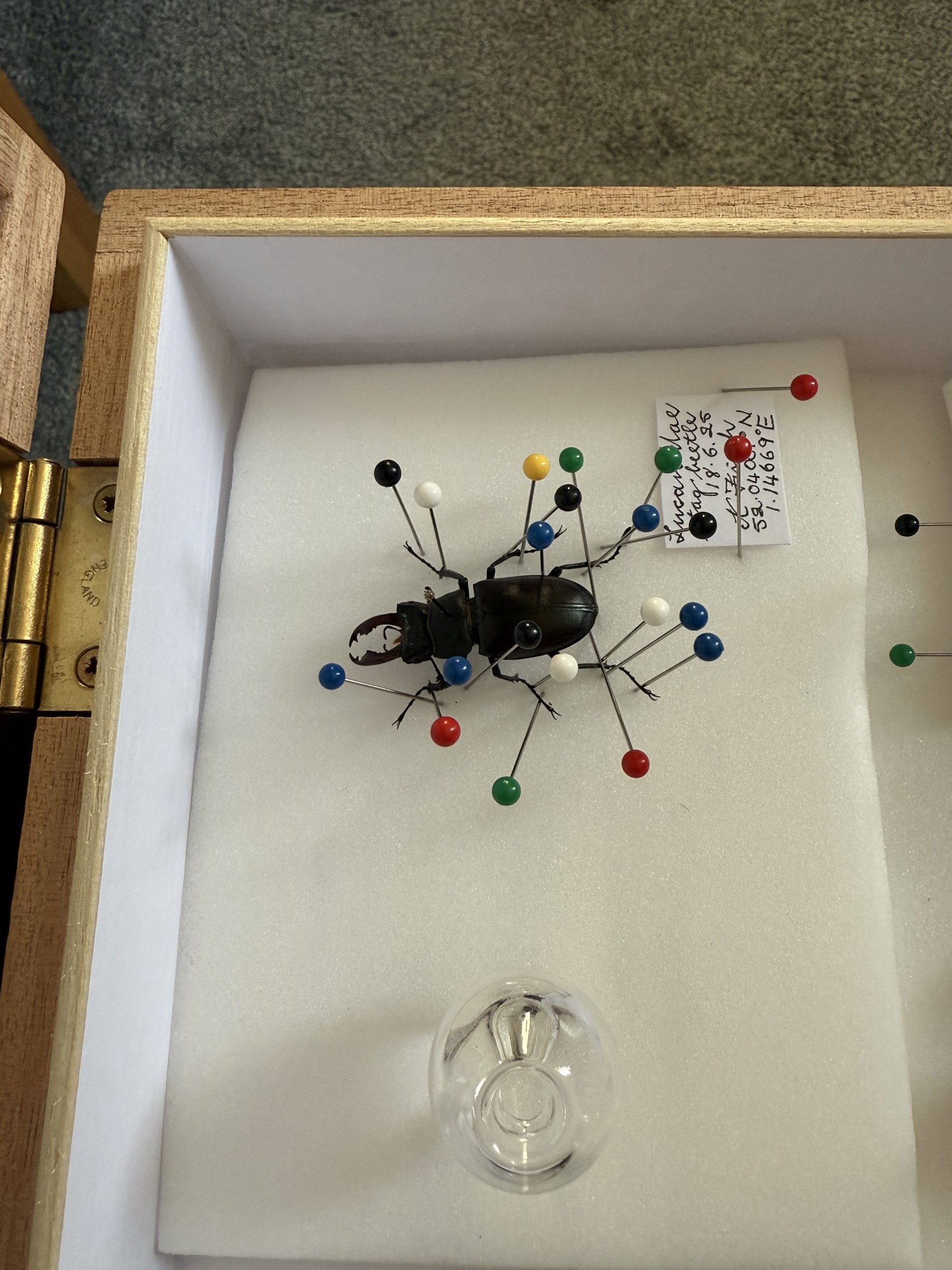
- Correct label placement
- Basic drying and storage
- Protecting specimens from damage
- Understanding what makes a specimen useful for later study
This course is not about collecting insects for display. It is about preparing material responsibly so it can support learning, identification and recording.
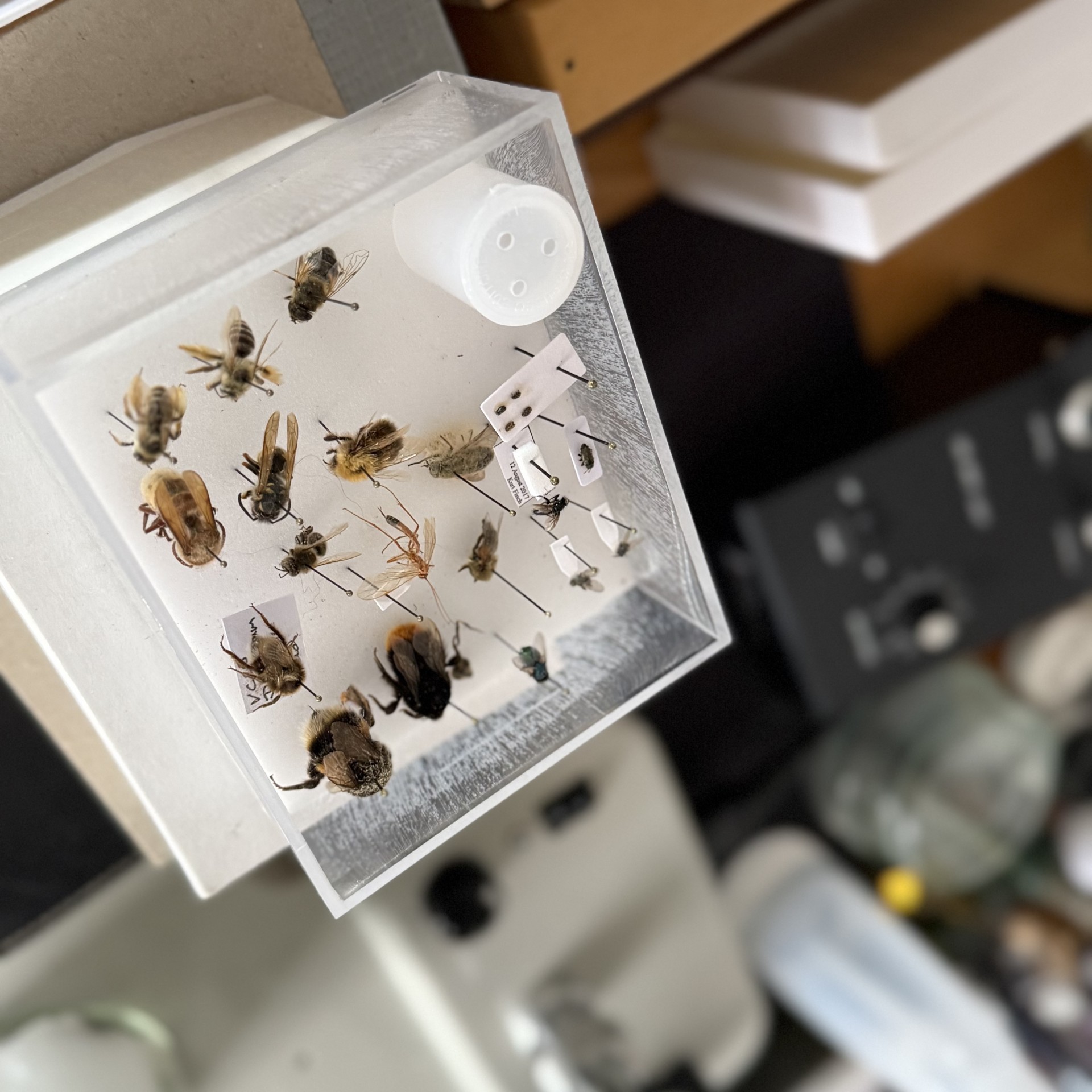
Building a Small Reference Collection
A good reference collection is not a trophy cabinet. It is a learning tool.
You will learn how a carefully prepared collection can help you compare specimens, understand variation, practise identification and build long-term natural history skill.
We will cover:
- What should and should not be kept
- How to avoid unnecessary collecting
- Why labels are as important as specimens
- How to store material safely
- How to keep records connected to specimens
- How a reference collection supports future study
The goal is quality, not quantity.
Ethical and Responsible Practice
This course keeps ethics at the centre.
You will learn that collecting should have a purpose.
You will be encouraged to think carefully about:
- Whether a specimen needs to be taken
- Whether a photograph or observation is enough
- Whether the specimen can be identified alive
- Whether preservation is justified
- How to reduce waste and damage
- How to keep useful records
- How your study can contribute to better natural history knowledge
Good entomology is careful, honest and restrained.
Who This Course Is For
This course is ideal for:
- Beginners who have completed an introductory entomology course
- Naturalists ready to move beyond field observation
- People who have started collecting but need a proper system
- Wildlife recorders wanting stronger identification habits
- Conservation volunteers
- Outdoor educators
- Amateur entomologists
- Anyone interested in microscope-based insect identification
- Anyone wanting to begin a small reference collection responsibly
This is not a course for complete casual interest. It is for people ready to take the next practical step.
By the End of the Course, You Will Be Able To:
- Organise field-collected material more confidently
- Label specimens and records properly
- Understand basic preservation choices
- Set up and use a stereo microscope
- Handle small specimens with more care
- Recognise useful identification features
- Use keys more carefully
- Understand your identification limits
- Prepare simple mounted specimens
- Begin building a responsible reference collection
- Continue your entomology study with more order and confidence
You will leave with a working method, not just a pile of information.
Where This Fits in the NOMAD Entomology Pathway
This is the third stage in the NOMAD Outdoor Learning entomology pathway.
Start with Introduction to Field Entomology if you are new.
Build your outdoor skill with Field Entomology Skills: Survey, Collection & Recording.
Then take Field to Microscope when you are ready to process, examine, identify, mount and curate specimens properly.
You can continue developing through the NOMAD Entomology Club, with seasonal field study, practical challenges and ongoing natural history learning.
Course Details
Course: Field to Microscope: Insect Identification, Mounting & Curation
Level: Beginner to intermediate
Duration: 2 days
Experience required: Some basic field entomology experience is helpful
Teaching style: Practical, small-group bench training
Main focus: Organisation, microscope use, identification, mounting and curation
Suitable for: Developing naturalists, amateur entomologists, recorders and serious beginners
Next step: NOMAD Entomology Club and specialist taxonomic workshops
Book Your Place
If you have started finding insects but do not know how to process, identify, preserve or organise them properly, this course is the next step.
Learn how to move from field collection to microscope work with clarity and confidence.
Book your place on Field to Microscope and start building proper bench-based entomology skills.
Location
Suffolk
12th September 2026, 10:00 AM
All pins, boards, card points & tools provided.
On site
What Students Must Bring
- Fine forceps
- Notebook
- Hand lens (recommend 10x)
- Your own preserved specimens (optional)
- Reading glasses, if necessary
- Packed lunch & drinks
Tea, coffee & biscuits are available throughout the day.