Common Insects of the Suffolk Coast
The Suffolk coast is often celebrated for its sweeping shingle beaches, salt marshes, and big skies—but look closer, and an entirely different world reveals itself. Among the grasses, driftwood, and tidal margins, live a remarkable diversity of insects, each playing a quiet but essential role in coastal ecosystems.
For those willing to slow down, crouch low, and observe with intent, the coastline becomes a living field laboratory—rich with opportunity for discovery, study, and meaningful conservation.
Why Coastal Insects Matter
Insects are foundational to coastal habitats. They pollinate plants, recycle organic material, and provide food for birds and other wildlife. On the Suffolk coast, where conditions can be harsh—salt spray, wind exposure, shifting substrates—only specialised species thrive. That makes them particularly fascinating to study.
Understanding these insects isn’t just about curiosity—it’s about stewardship. The more we know, the better we can protect these fragile environments.
Species to Look For
Here are just a few of the common and characteristic insects you may encounter along the Suffolk coast:
Marram Grass Weevil (Otiorhynchus atroapterus)
A flightless beetle often found around dune systems, feeding on grasses such as marram (Ammophila arenaria). Look for characteristic notches along leaf edges.
How to observe:
Search at dusk along dune vegetation. A head torch can reveal them as they feed.
Red-tailed Bumblebee (Bombus lapidarius)
A striking pollinator with a velvety black body and a bright red tail. Frequently seen on coastal wildflowers such as bird’s-foot trefoil (Lotus corniculatus).
How to observe:
Watch flowering patches on warm, still days. Note behaviour—are they foraging, nest-searching, or interacting?
Lesser Marsh Grasshopper (Chorthippus albomarginatus)
A common orthopteran of coastal grasslands and salt marsh edges. Subtle in colour but identifiable by its soft, repetitive stridulation (song).
How to observe:
Walk slowly through the grass and listen. Sweep netting is highly effective here.
Sea Aster Mining Bee (Colletes halophilus)
A true coastal specialist, closely tied to sea aster (Tripolium pannonicum). This solitary bee emerges late in the season.
How to observe:
Look for aggregations near sea aster blooms in late summer. Watch for nesting activity in sandy soils.
Seven-spot Ladybird (Coccinella septempunctata)
A familiar but important predator, feeding on aphids and other small insects. Often found on low vegetation.
How to observe:
Turn over leaves gently and observe feeding behaviour.
Small Copper (Lycaena phlaeas)
A vibrant butterfly with fiery orange wings, often seen basking in sunny, sheltered spots.
How to observe:
Scan low vegetation and bare ground in sunny weather. Approach slowly—this species is alert and quick to fly.
Green Tiger Beetle (Cicindela campestris)
A fast-running, visually hunting predator with a bright metallic green sheen.
Found on sunlit, open ground—especially heathland, coastal paths, sandy tracks, and compacted bare soil with sparse vegetation (not loose dunes).
How to observe:
Walk slowly and scan a few metres ahead.
Look for:
- Short, rapid runs followed by abrupt stops
- Flashes of metallic green in sunlight
If flushed, they fly a short distance and land again—often facing you. Pause, and they’ll usually resume hunting.
Methods: Observing and Collecting for Study
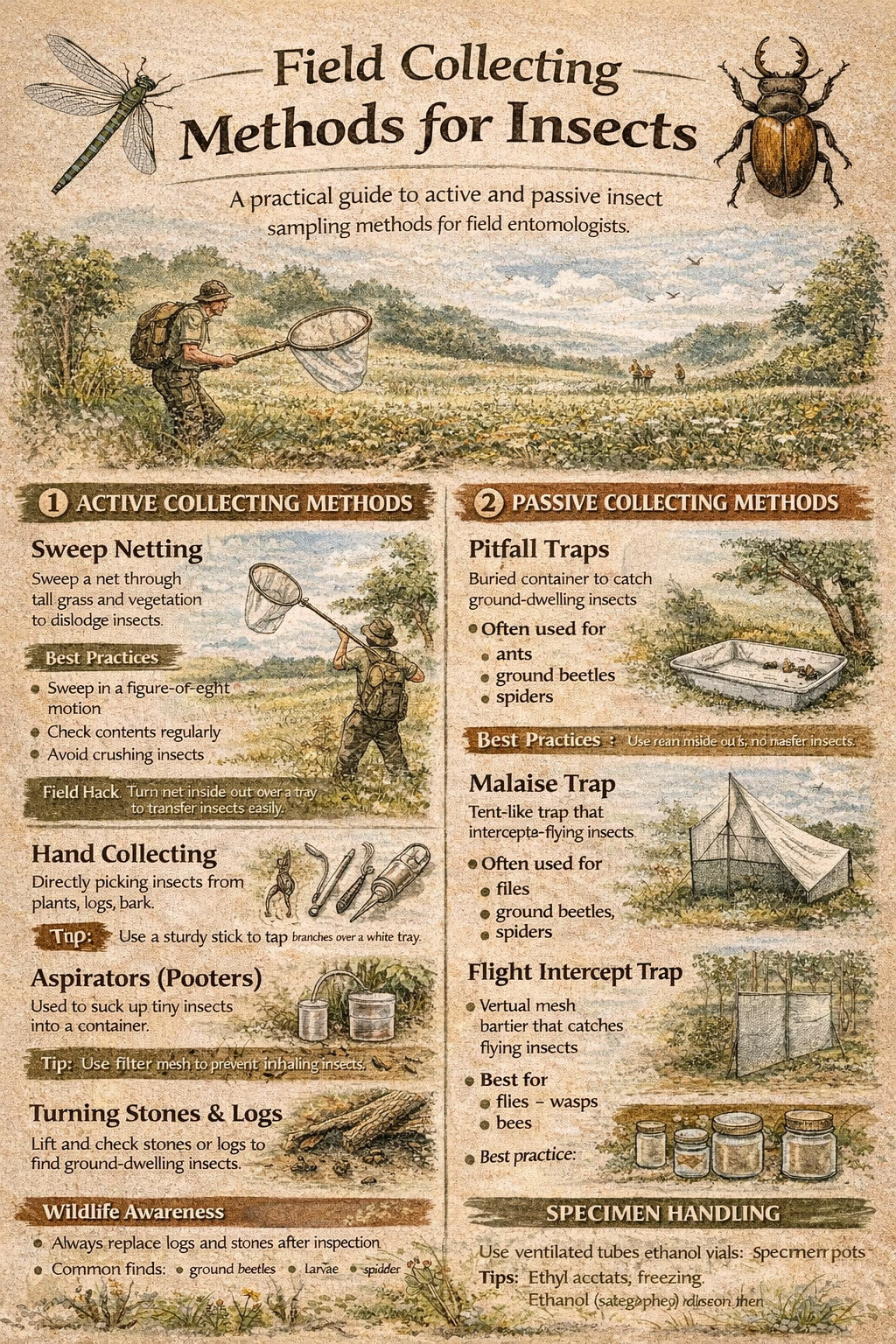
You don’t need much to begin—just curiosity and a few simple tools:
- Sweep Netting: Ideal for grasslands and salt marsh margins. A few steady sweeps can reveal a surprising diversity.
- Beating Tray: Hold beneath vegetation and tap branches gently to dislodge insects.
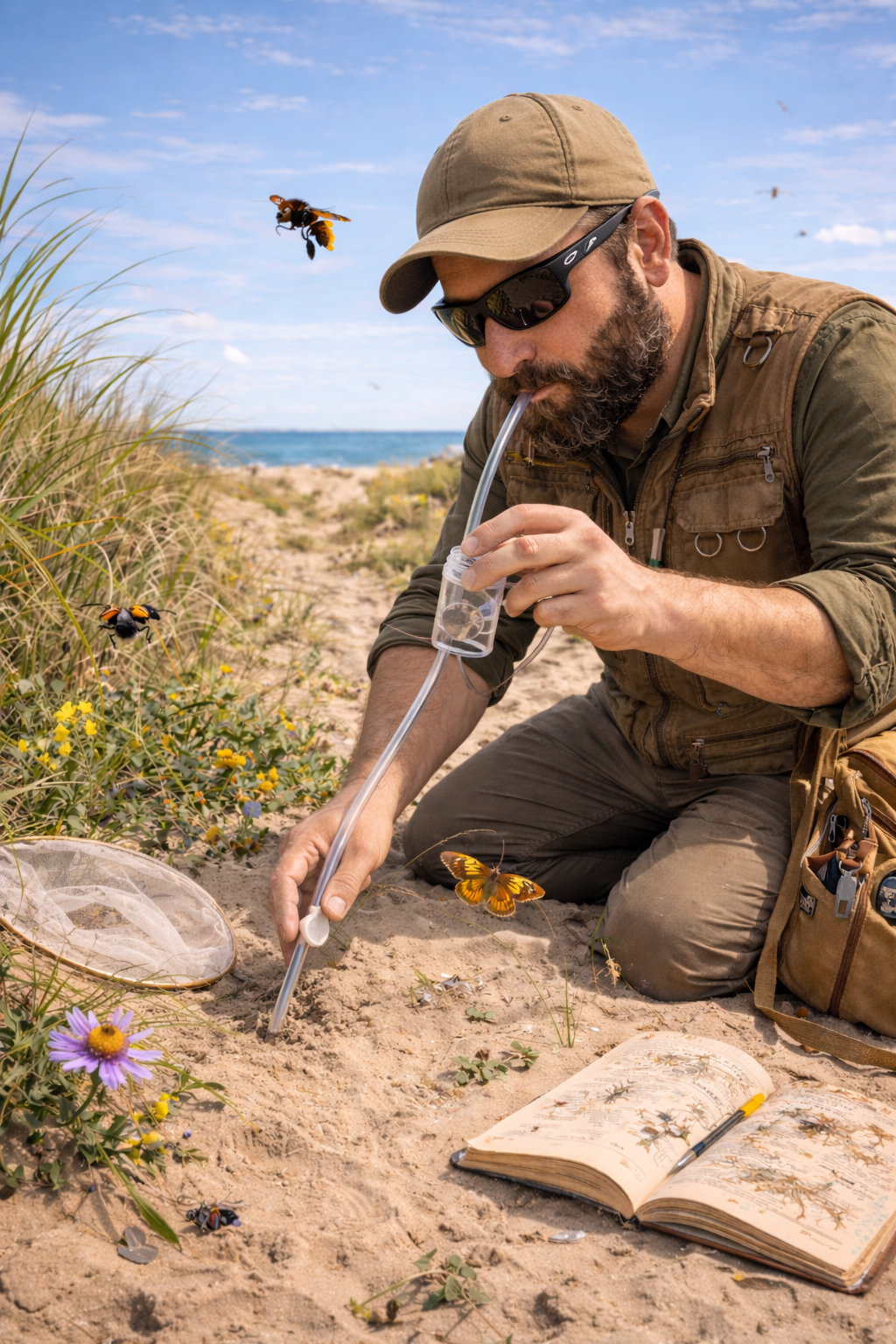
- Pooters (Aspirators): Useful for safely collecting small specimens without damage.
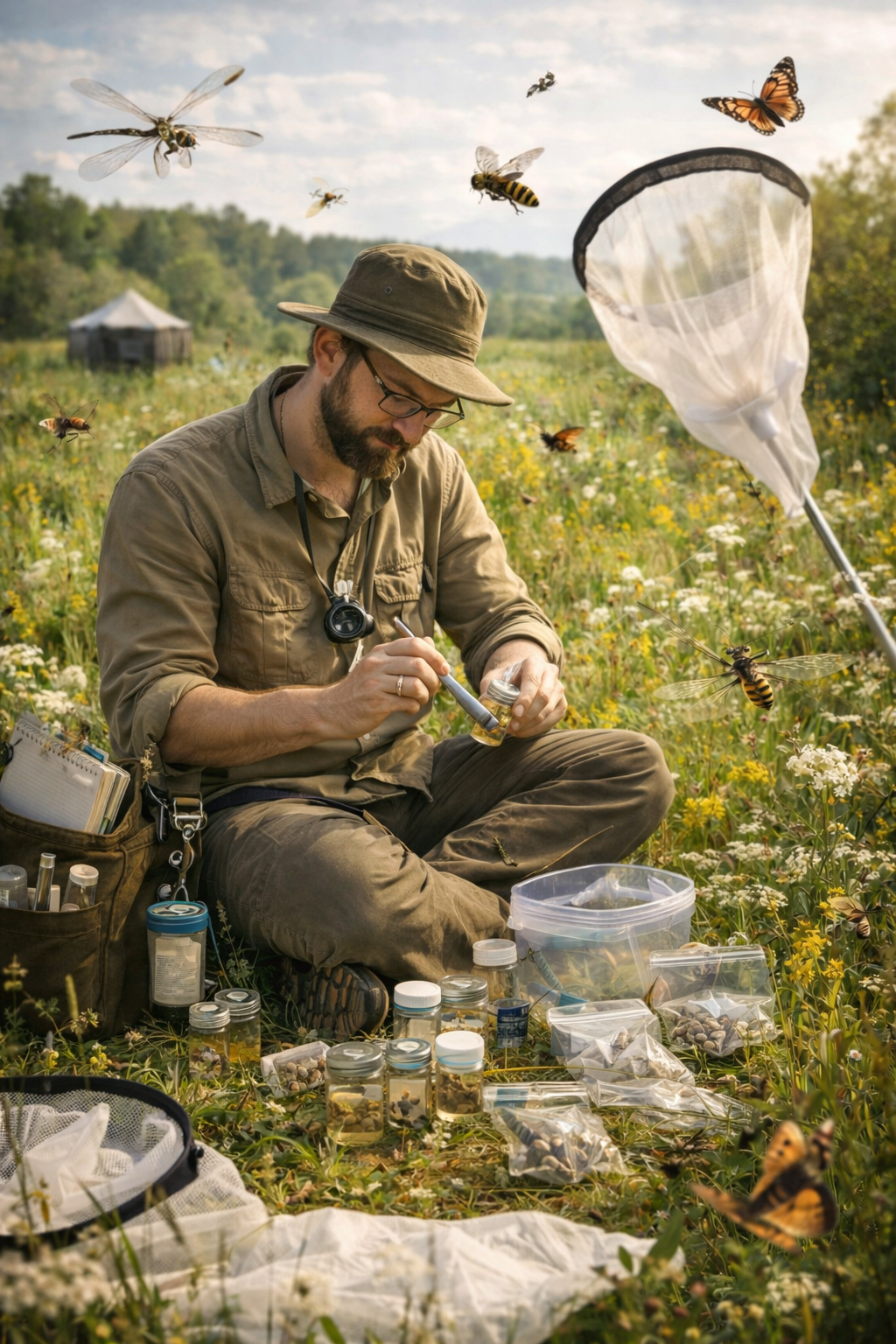
- Specimen Pots & Hand Lens: For close observation in the field.
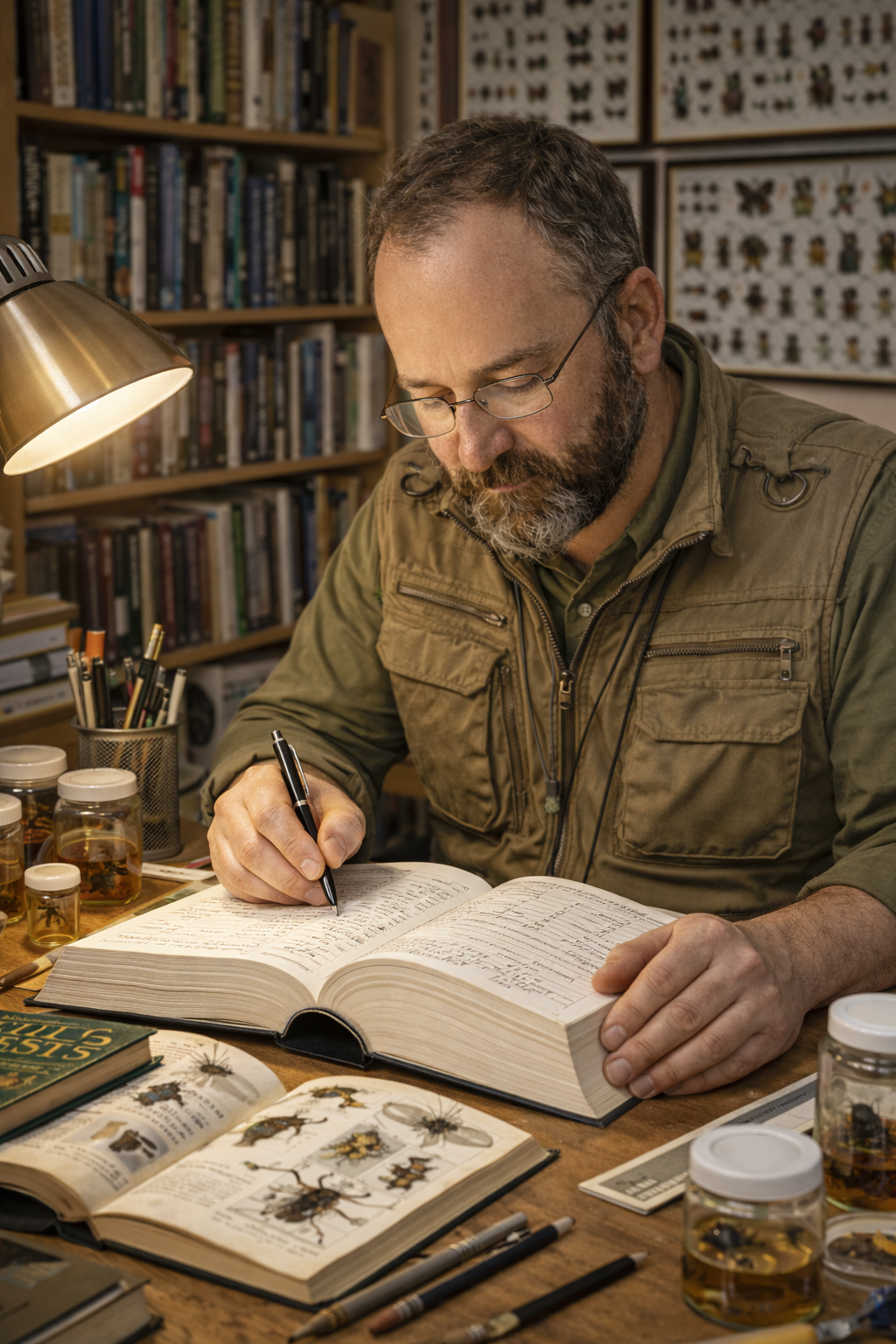
- Field Notebook: Record location, habitat, weather, and behaviour—this is where real value lies.
Ethical collecting is key. Take only what you need for study, avoid rare species, and always prioritise habitat preservation. Even just two or three specimens are fine.
The Joy of Looking Closer
There’s something deeply grounding about studying insects. It sharpens your awareness, slows your pace, and connects you to the landscape in a profound way. Each specimen tells a story—of adaptation, survival, and ecological balance.
Even a short walk along the Suffolk coast can become an expedition of discovery when viewed through an entomologist’s lens.
From Curiosity to Capability
If this sparks something in you—a desire to understand what you’re seeing, to identify species confidently, or to build a meaningful collection—then it might be time to go deeper.
Our 'Introduction to Entomology' course is designed exactly for this. You’ll learn:
- How to observe and collect insects effectively
- Identification techniques using real specimens
- How to record scientifically valuable data
- Ethical approaches to collecting and conservation
Whether you're a complete beginner or looking to refine your skills, the course bridges that gap between casual observation and structured study.
Conservation Starts With Attention
You don’t need to be a professional scientist to contribute to conservation. Careful observation, accurate recording, and a genuine respect for these small little creatures go a long way.
The Suffolk coast is alive with insect life—quiet, intricate, and often overlooked. But once you begin to notice, it’s hard to stop. And it's all around us, everywhere!
And that’s where it all begins.